I got a call last week, Thimphu. The client said, ” My faucet is leaking. Again.
Not a big leak. Just that slow drip that drives you mad at night. Drip. Drip. Drip. He had already changed the faucet once, a year earlier. The same problem came back. When I went there, the faucet was not the problem, not really. The bathroom sink was fine. The pressure was high, too high, and nobody had put in a pressure reducer. So the cartridge kept wearing out. We changed the cartridge, put in a reducer, done. Cost was not huge. But it was the second time he had paid for a faucet he did not need
That is, to me, the whole story with a lav faucet. People replace the faucet. The problem was somewhere else
Understanding Different Types of Lav Faucet
A lav faucet looks like one product. It is not. And that is where people get stuck, even people who are careful about the rest of a renovation. I am careful, and I still get stuck sometimes, if I am honest.
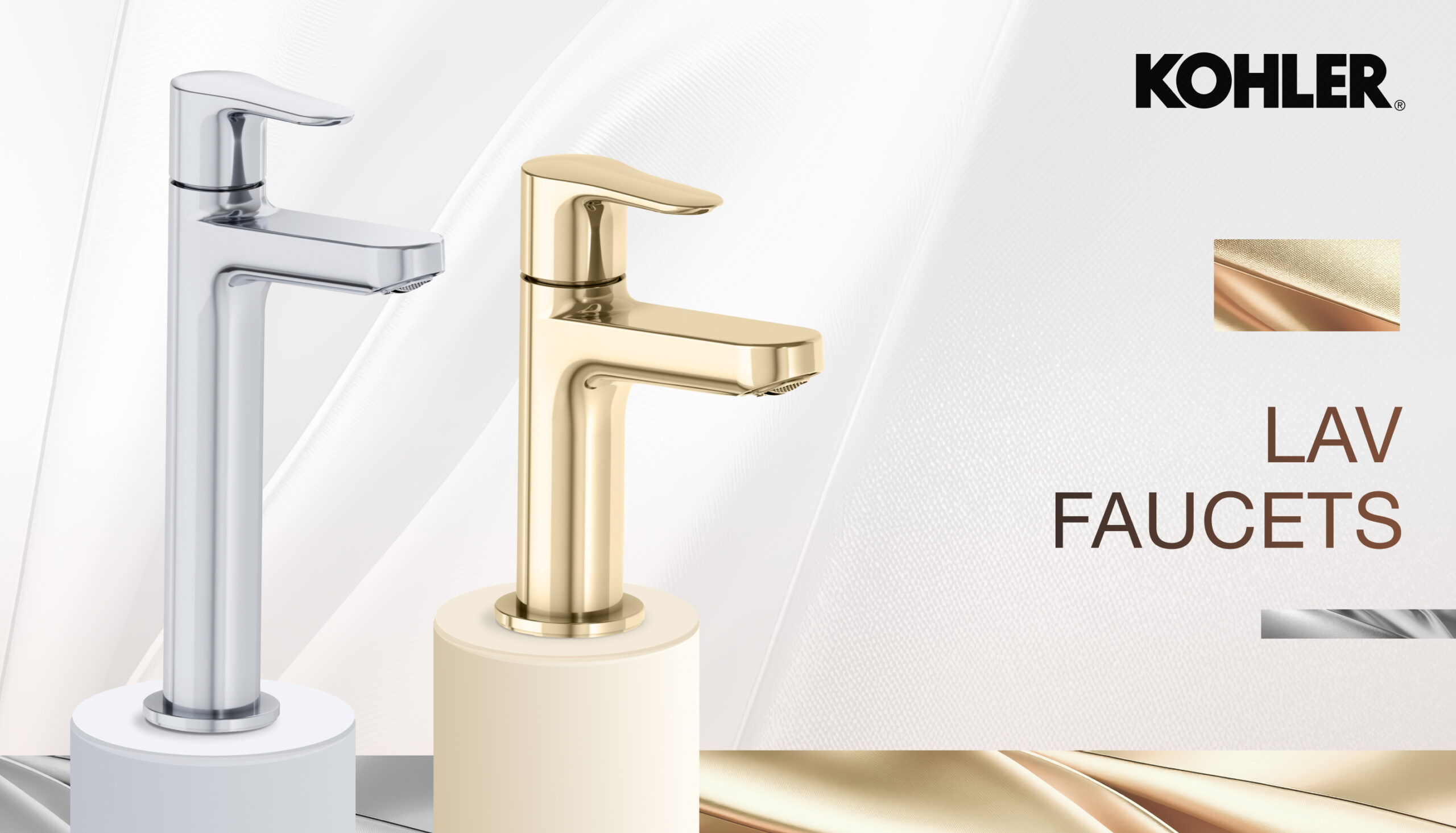
You have got single-hole. You have got centreset, 4-inch, still common in older houses. You have got widespread, 8-inch, where the handles are separate. Wall-mounted, which comes out of the wall. And then sensor. Sensor is a different animal altogether. They all give you water. They do not all fit the same sink. They do not all fit the same holes. They definitely do not all work with the same pressure. And pressure, in Bhutan, well, pressure is a whole topic on its own.
Let me try and explain the holes bit, because it confuses people. And I mean, it confused me when I started
Some bathroom faucets are made for a sink with one hole. Others need three holes. In a photo online, you honestly cannot always tell. In your bathroom, you can tell straight away, because the faucet has nowhere to go, or you have an extra hole showing and you are wondering what to do with it.
I had this in Paro. Faucet delivered. Sink in place. Three holes in the sink. The faucet only needed one. Client standing there. Plumber standing there. Me standing there. We had to order a cover plate. A week lost. All because nobody checked one detail. And it was not anyone’s fault, really. It was just one of those things that gets missed when you are in a rush. You are thinking about chrome or brushed nickel or matte black, and you forget to ask, wait, how many holes?
So what do I tell people now? Measure. Not roughly. Actually measure
Hole spacing, centre to centre. Number of holes. Counter thickness, if it is a countertop sink. Water pressure, if you know it, and if you do not know it, say so, because that matters too. Take two photos, one from above, one from underneath, where the connections are. If you are keeping your old sink, photo that as well. Send them to the showroom. Send them to your plumber. Five minutes. It saves so much back and forth. I know it sounds basic. Basic is what works here, most of the time. Most of the time, actually
Then, separate thing, check the type. Mixer or separate hot and cold? Single lever or two handles? Sensor or manual? Write it down. And write down the model number while you are at it. Do not rely on colour. “The chrome one” could be ten different models. The model number is what the supplier will look up. It is also what you will need in two years if you need a spare cartridge. You will not remember the model then. Nobody does. I do not, and I do this for a living. I have a notebook for it. I still forget
Cleaning. People forget to think about this until they are living with the faucet
Chrome looks sharp in photos. Clean lines. In real life? Water spots show on chrome. Every single time. Brushed finishes hide spots better. Matte black looks, I have to admit, very good in photos. It also shows limescale if your water is hard. If you have kids using the sink every morning, you will notice this in about two weeks. Not a huge thing. Just one of those small daily annoyances that builds up. And builds up. And builds up. You know what I mean
Now, Kohler Sensor Faucets. People ask me about these a lot.
Sensor faucets are brilliant, in the right place. No touching. Good for hygiene. Good for a guest bathroom, good for an office, good for a commercial washroom. In a home bathroom? Depends. Depends on who uses it. Depends on water pressure. Depends on whether you have a reliable power supply for the sensor: battery or mains. I had a client in Phuentsholing who loved the idea, installed two, then realised the batteries needed changing every few months, and nobody remembered to do it. faucets stopped working. Not broken. Just flat batteries. Simple thing. Easy to miss. And then they called me, thinking the faucet was dead.
And sensor faucets do not like low pressure. They need a certain flow to work properly. If your pressure is low, and a lot of houses in Bhutan have variable pressure — I mean really variable: morning good, evening bad — the sensor will still open, but the flow will be weak. You will stand there waving your hands, thinking it is broken. It is not broken. It is just low pressure. I always ask about pressure first, before I recommend a sensor. I think that is the most useful question you can ask, actually. More useful than how much is it? Much more useful.
Pricing. This is where it gets messy
If you search bathroom faucets online, you will get numbers all over the place. Some low, some high, most of them incomplete. Why? Because they usually show the faucet only. They do not show the flexible connectors. They do not show the drain, if you need a new one. They do not show the fitting. They do not show delivery. So the number you see is not the number you pay. A written quote that includes fitting, with the model number on it, is the only useful comparison. Anything else is guesswork, really. And guesswork is expensive in this game. I have learned that the hard way, and I have seen clients learn it too
Same with bathroom faucets in general. People compare a single-lever mixer with a widespread set and think the widespread one is more expensive. Sometimes it is, on the shelf. Then you add the extra connections, and the extra fitting time, and suddenly the gap closes. Or it gets wider. Depends. So you have to compare the full job, not just the faucet. And ask what is _not_ included. That question, I find, tells you more than the price itself
I had a client in Thimphu recently, quoted for the faucet alone. The final bill was close to 35% higher once connectors, drain, and fitting were added. Nothing dishonest. Just incomplete at the start. It happens a lot. More than it should, if I am honest. I am not blaming the showroom. They quoted what they were asked to quote. But the client thought that was the total. And who can blame them? The quote looked like a total
Searches for Kohler Bhutan come up a lot at this stage. Usually people are trying to work out what is actually available here, not what is on an international site. Stock in Bhutan is variable. Thimphu showrooms tend to have more choice. Outside Thimphu, a lot is ordered in. Delivery can slip. Prices can shift between quote and delivery. A written quote with a delivery estimate helps. It does not fix everything, but it helps. Ask about spares at the same time. Cartridges wear out. Aerators clog. That is normal use. You do not want to wait a month for a small cartridge. I have seen that happen too. It is frustrating for everyone. For me, for the client, for the showroom
Small bathroom? A single-lever lav faucet usually makes more sense. Less clutter. Easier to clean around. Easier to use with one hand when you have soap on the other. Bigger bathroom, double sink? Widespread can look better, more balanced. Brochure photos, I have to say, are not much help here. They show bathrooms that are much larger than most real bathrooms. Your actual room should decide. Counter space. A soap dispenser next to the faucet. A toothbrush holder squeezed in. Those are the real constraints. Not the brochure. Never the brochure. I will keep saying that.
Installation is rarely as quick as people expect. Water off. Old faucet out, which is often seized up, corroded, stuck. You know, the plumber is under the sink, torch in mouth, trying to loosen a nut that has not moved in ten years. New faucet in, levelled, sealed, connected, tested. Leaks rarely show straight away. They tend to show up an hour later, under the sink, where you cannot see them. Put a dry cloth under the connections. Check it after an hour. Check it again next morning. If it is dry, you are good. If it is wet, you have caught it early. I still do this every time. Every single time. It takes ten seconds. Ten seconds.
Maintenance is simple, but it has to be done. Wipe regularly. Do not use harsh acidic cleaners; they dull the finish over time. Clean the aerator now and then: unscrew it, rinse it, put it back. If your water is hard, you will get white scale around the base. Soft cloth, diluted vinegar, done. If you leave it, it builds up and looks like damage. Most of the time, it is not damage. It is just scale. People sometimes replace a faucet that only needed a cleaning. That is a waste, and it is avoidable. I have seen that too, more than once. More than twice, if I am being honest. Probably three times, now I think about it.
Is it worth spending more? Depends on use. Main bathroom, three or four people, every day, yes, spend a bit more on the cartridge and the finish. Guest bathroom, used a few times a year, no, do not overthink it. What I usually suggest, and this has held up pretty well, is fit first, cartridge and pressure second, finish last. Fit first. Always fit first. I will say it again because it is that important. Fit first. Sorry, I know I keep repeating it. But it matters.
Before you go to a showroom, jot this down on your phone. Type: single-hole, centreset, widespread, wall-mounted, or sensor. Number of holes. Hole spacing. Mixer or separate. Model number. Total price including fitting. Spares, cartridge, and aerator. With that list, you are much less likely to wait weeks for a missing part. Not impossible. Just less likely. And less likely is enough, most of the time. Most of the time.
Frequently Asked Questions
What lav faucet should I buy?
Measure your sink first, not the faucet you liked online. A lav faucet that does not match your holes will either not fit, or it will leave extra holes showing. A 4-inch centreset faucet on an 8-inch widespread sink, for example, will not work. I would send photos to the showroom before you go, if you can. It helps more than a verbal description, in my experience. It really does. I mean, really.
What is the price of bathroom faucets in practical terms?
There is no single number. Bathroom faucets change with type, finish, cartridge, and whether connectors and drain are included. Get a quote that says what is included and what is not. If it does not say, ask. That second part is where the real cost usually hides. I cannot stress that enough. Ask what is not included. Ask it twice, if you have to.
Sensor or manual?
Depends on use, honestly. Sensor is good for hygiene, good for guest bathrooms and offices. Manual is simpler, cheaper to maintain, and has no batteries to worry about. If your water pressure is low, or your power supply is variable, manual is usually the safer choice. Do not base it on a brochure photo. Base it on your actual bathroom, and your actual water pressure. Your actual pressure, not the pressure you wish you had.
Is Kohler Bhutan stock reliable?
It varies. Thimphu showrooms generally have more stock. Outside Thimphu, many models are ordered in. Ask for a written quote, a delivery time, and whether spares are available. Especially cartridges and aerators. Those are the parts you will actually need to replace at some point, and the parts people forget to ask about until they need them. And then they need them urgently, of course. Always urgently.